From a BlueWallet fork to Shroud
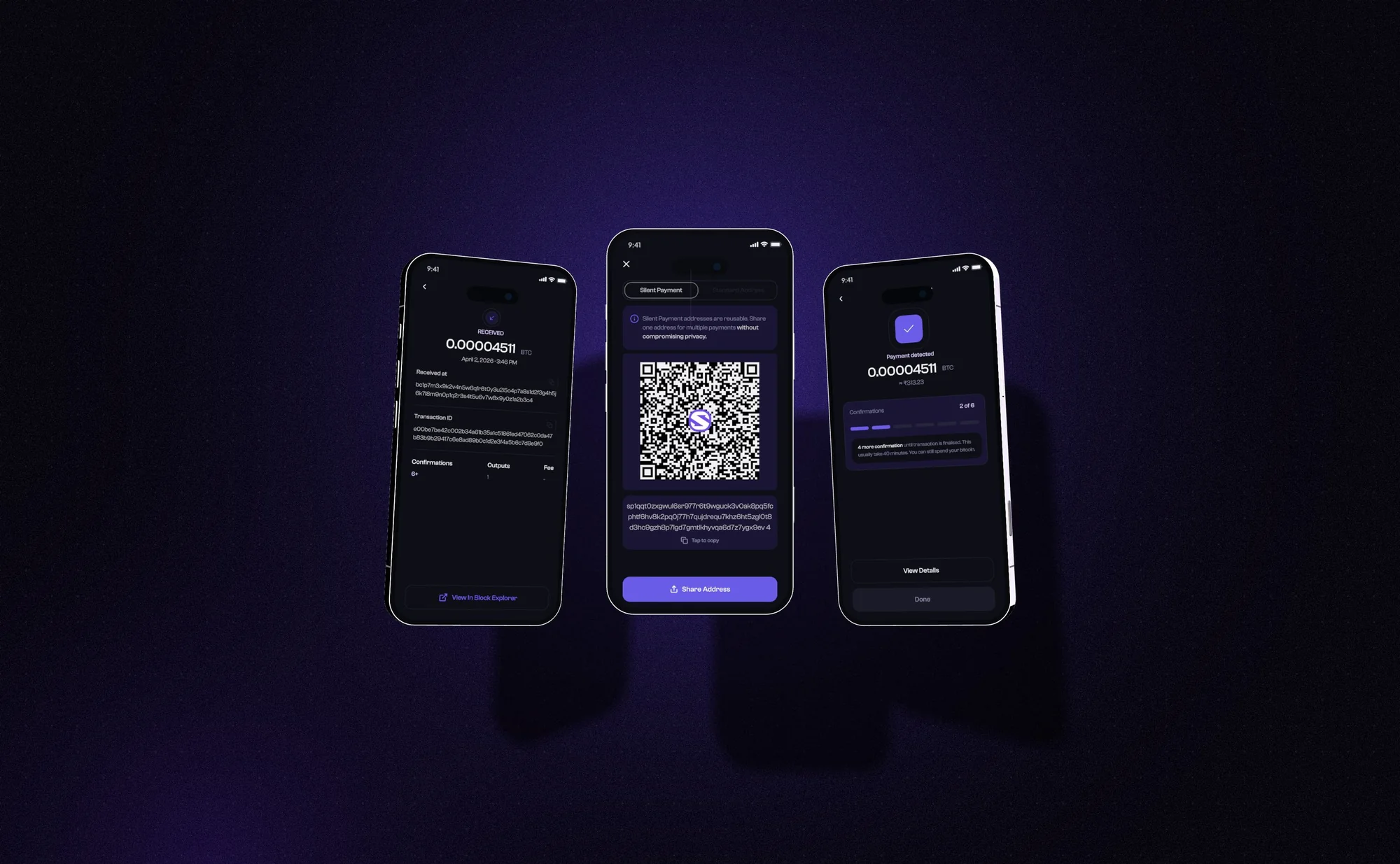
I researched Silent Payments, joined Shroud's initial team and developed the brand identity. The app started as a BlueWallet fork and looked exactly like BlueWallet. I took over the design and outfitted it with the new identity, working across the mobile wallet and its explanatory website.
Silent Payments lets a recipient share one reusable identifier while compatible sending wallets create fresh onchain outputs. My part was to make that unfamiliar payment model usable in the places where someone sends money or asks to be paid.
Privacy should not require a specialist
I tested the wallet with the audience at BitDevs in Chiang Mai, Thailand, to feel what privacy is like to use. The feedback was clear: make it intuitive for new users, not a complex native Bitcoin wallet that only plebs can use. That started the redesign.
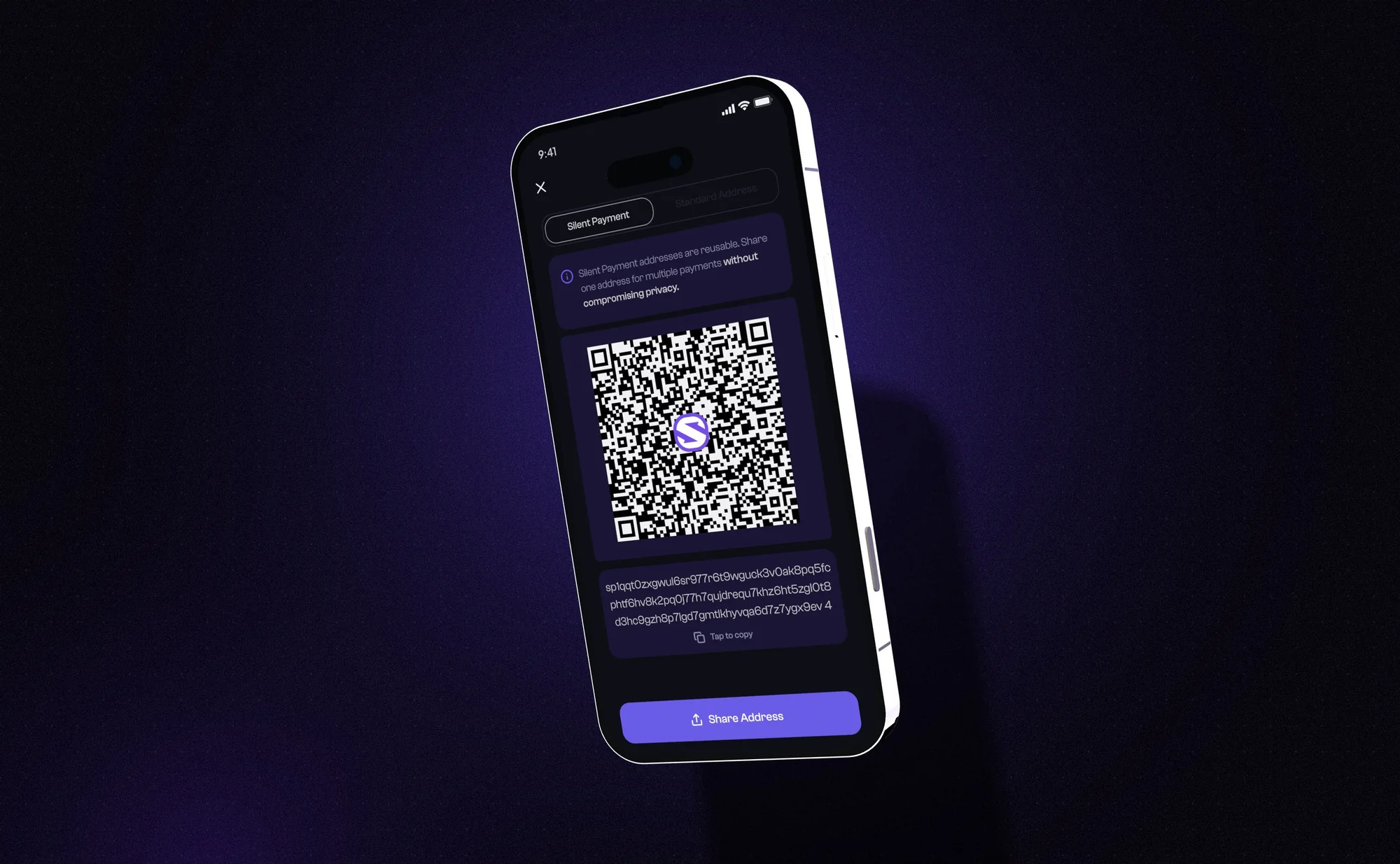
A new identity alone would not fix that. A person still needs to know what to share when receiving, whether the sending wallet supports a silent address, and why scanning affects when a payment appears. Those answers belong inside the wallet.
Explain privacy through the action at hand
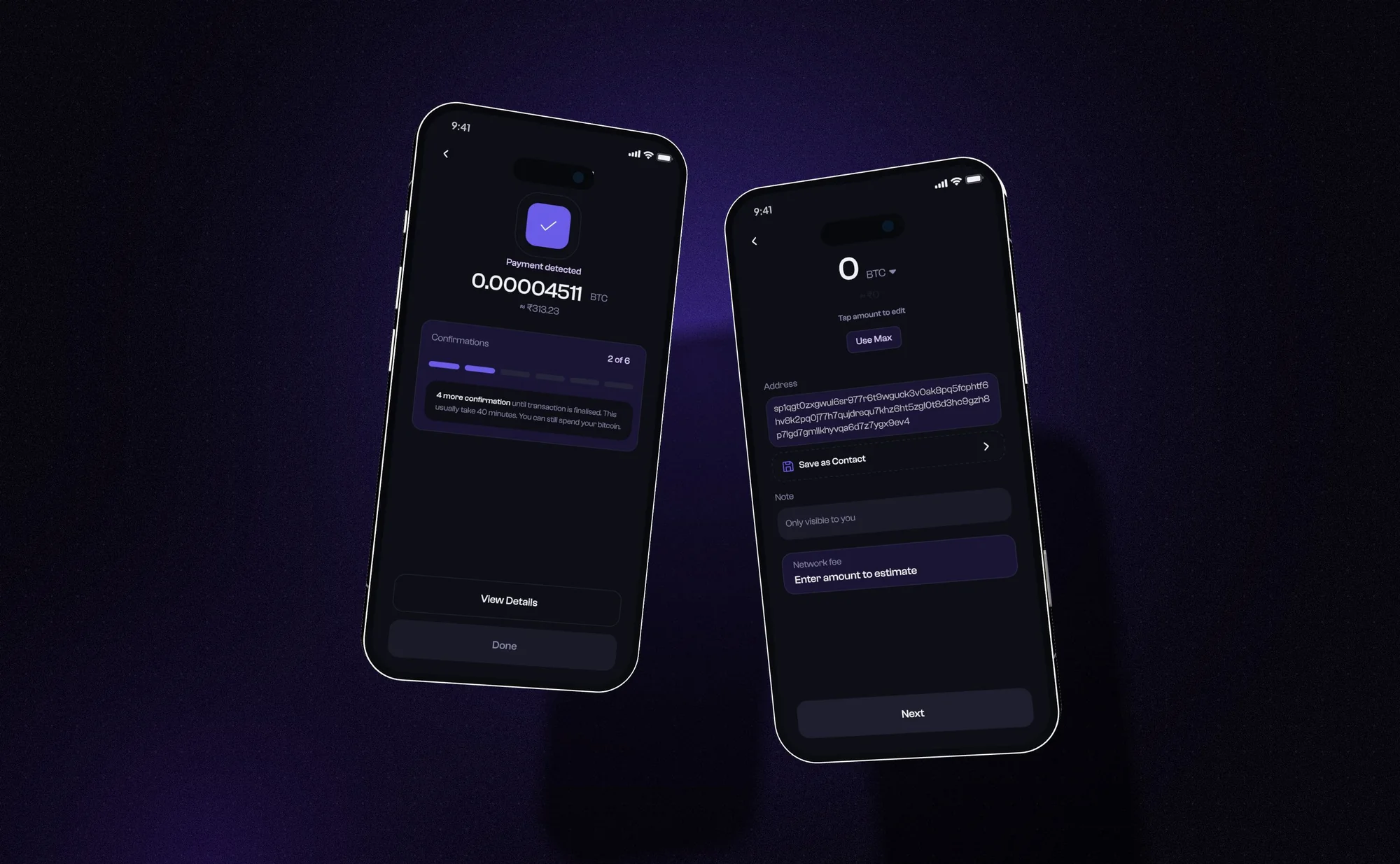
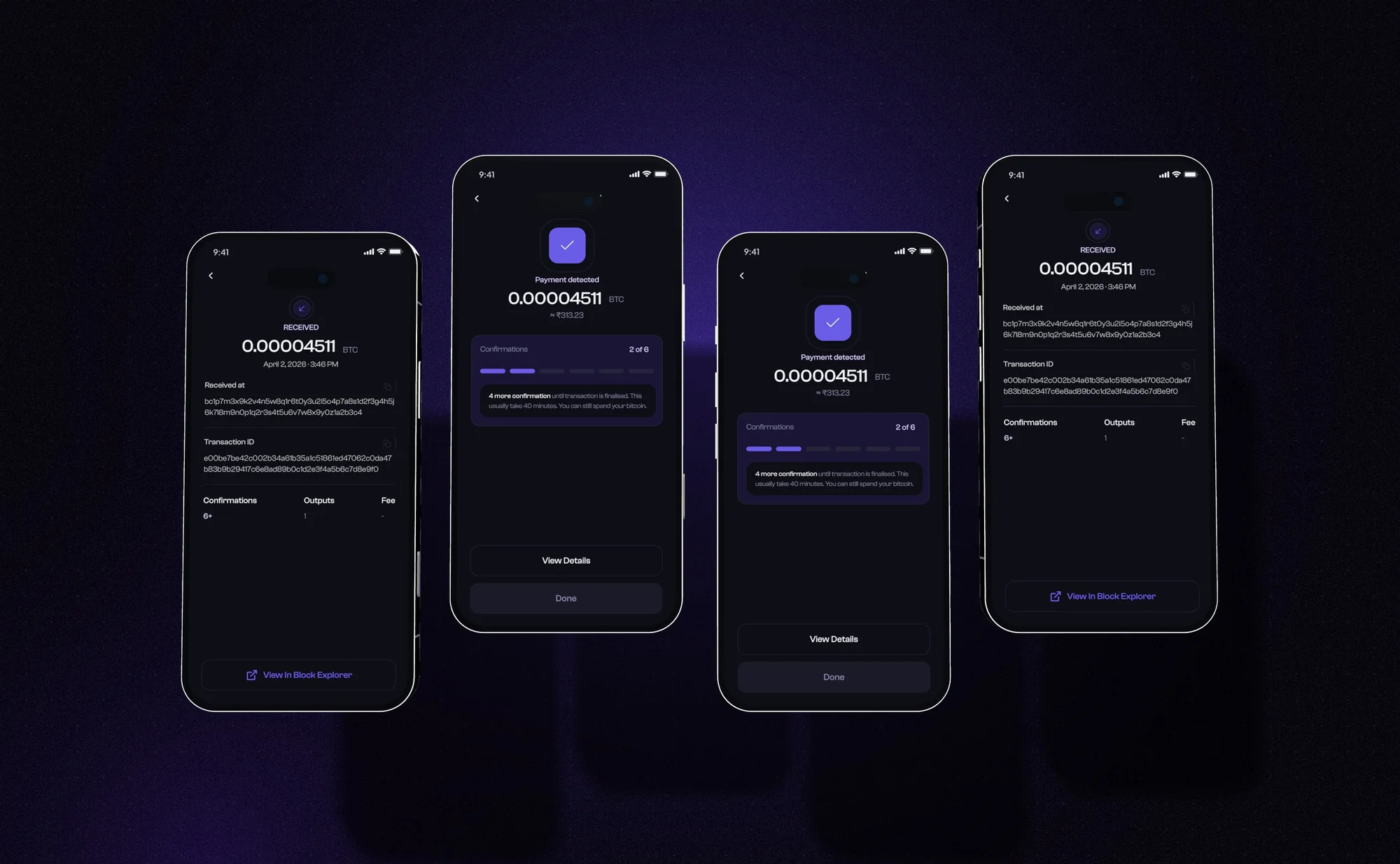
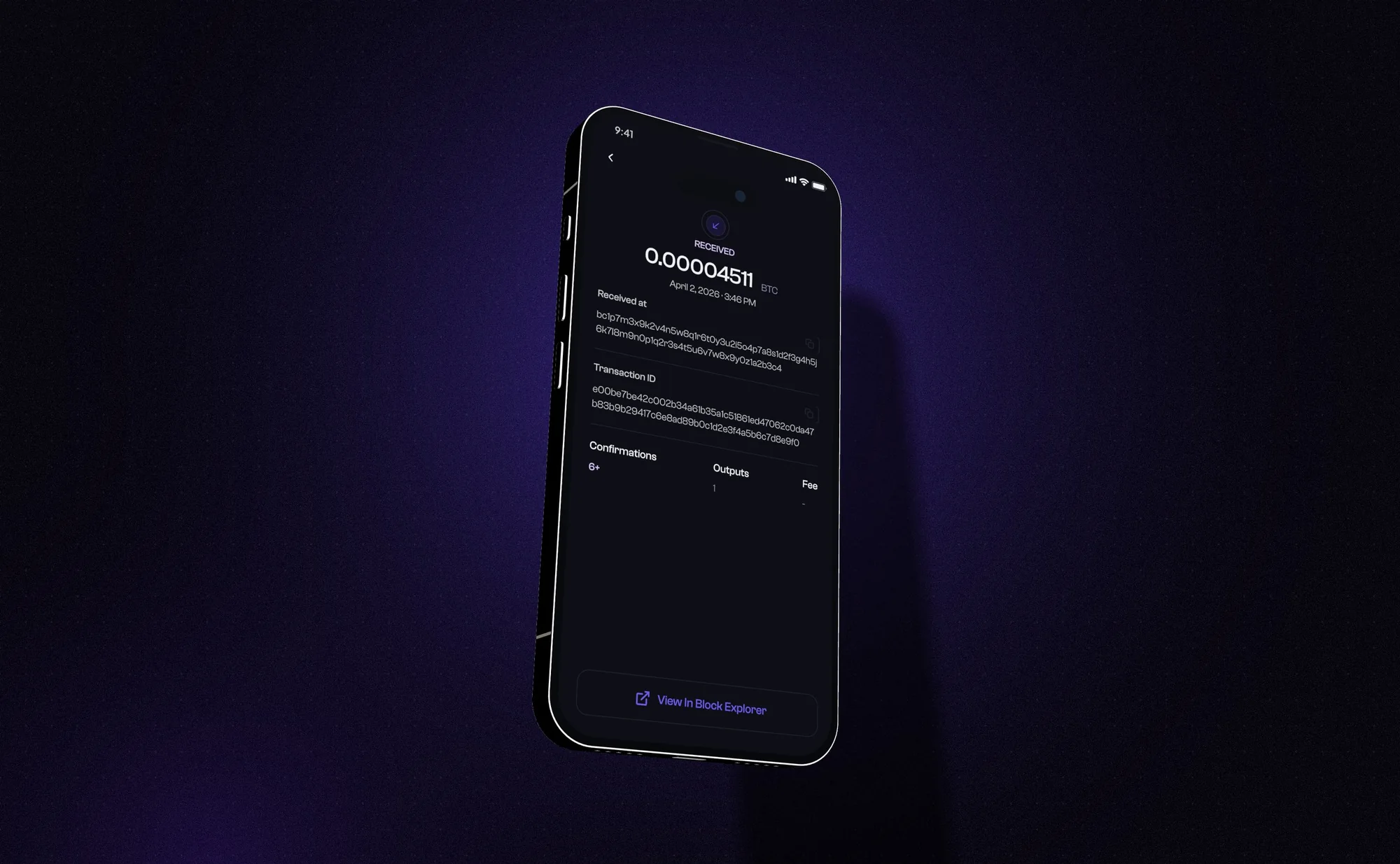
I worked on sending and receiving, including saved contacts and payment splitting. The receive screen ties the address to its purpose, and the payment screens keep the immediate task close. I carried the new identity through those flows so Shroud feels like its own wallet.
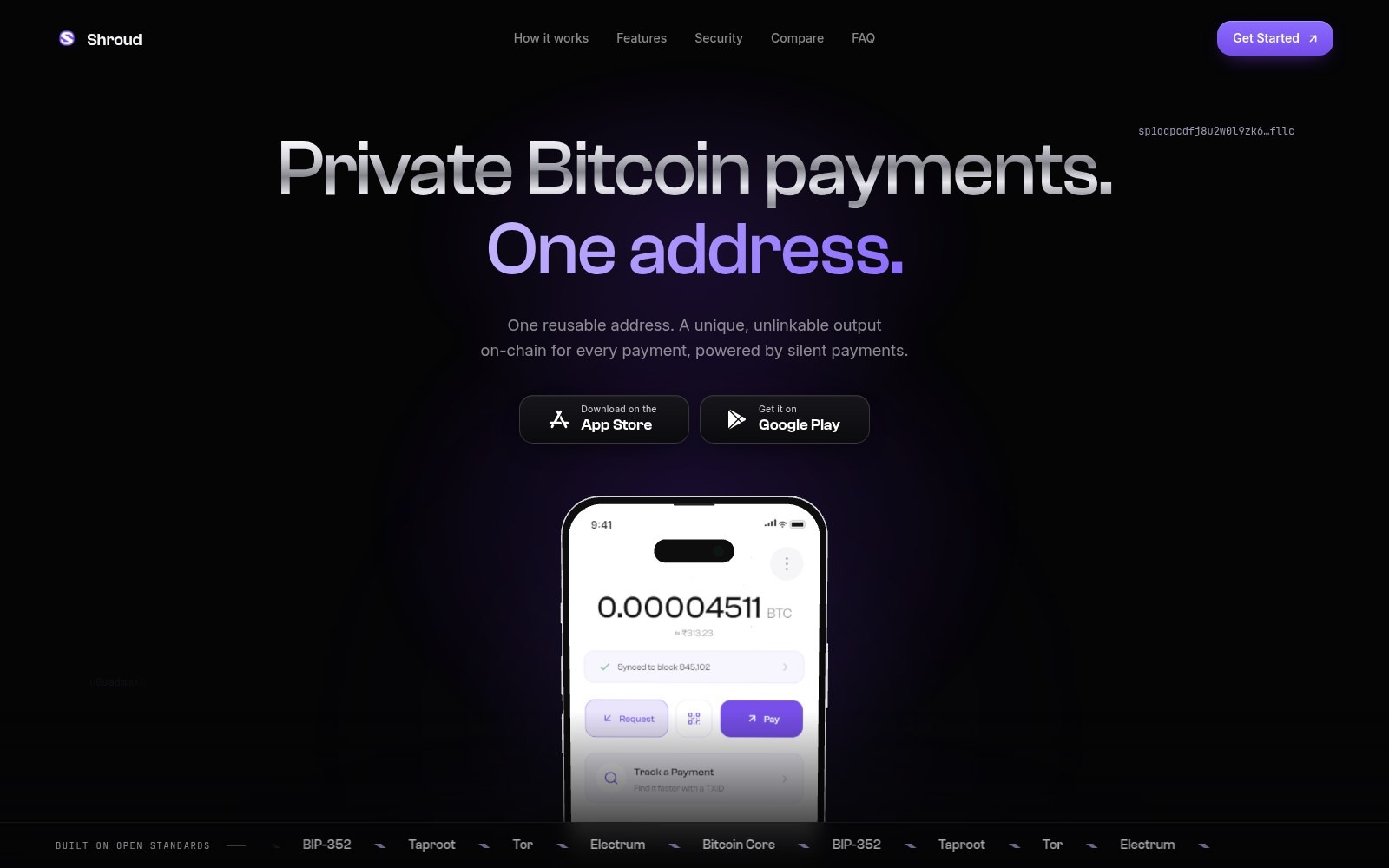
For the website, I set address reuse against the alternative: a silent address, fresh outputs and local scanning, so people can understand the wallet before installing it. The public website commits document my work on the mobile story and threat model.
Keep the privacy boundaries honest
A silent address does not make everything about using a phone private. Shroud's privacy policy says scanning happens on the phone, while the indexer sees requested block ranges and transaction IDs used for lookups. The explanation had to state those boundaries instead of suggesting nothing ever leaves the device.
Tor and node settings add another choice. Tor covers the indexer and Electrum connections when configured, but not every app request. On the website, the visual explanation also had to read well on phones, with reduced-motion and static fallbacks.
Give the new identity a practical job
I made receiving and paying the centre of the wallet, with settings available for people who need them. The work runs from the mobile payment screens to a website that explains Silent Payments and its limits. The BitDevs feedback set the direction: make the first experience approachable.
You can see the work in the iOS and Android apps and in the public source. The website carries the same identity into an introduction to Silent Payments.
The audience changed the starting point
The Chiang Mai feedback made the priority clear. A new identity mattered, but it had to support a wallet that newcomers could understand. Interest in privacy does not mean familiarity with Bitcoin wallet conventions.
Testing with the people who will use the product, in the room, changed the work more than any amount of desk research.
Based on my original Shroud Wallet case study ↗ and the product website ↗. Reviewed November 2026. Screens show the version documented in this case study.